

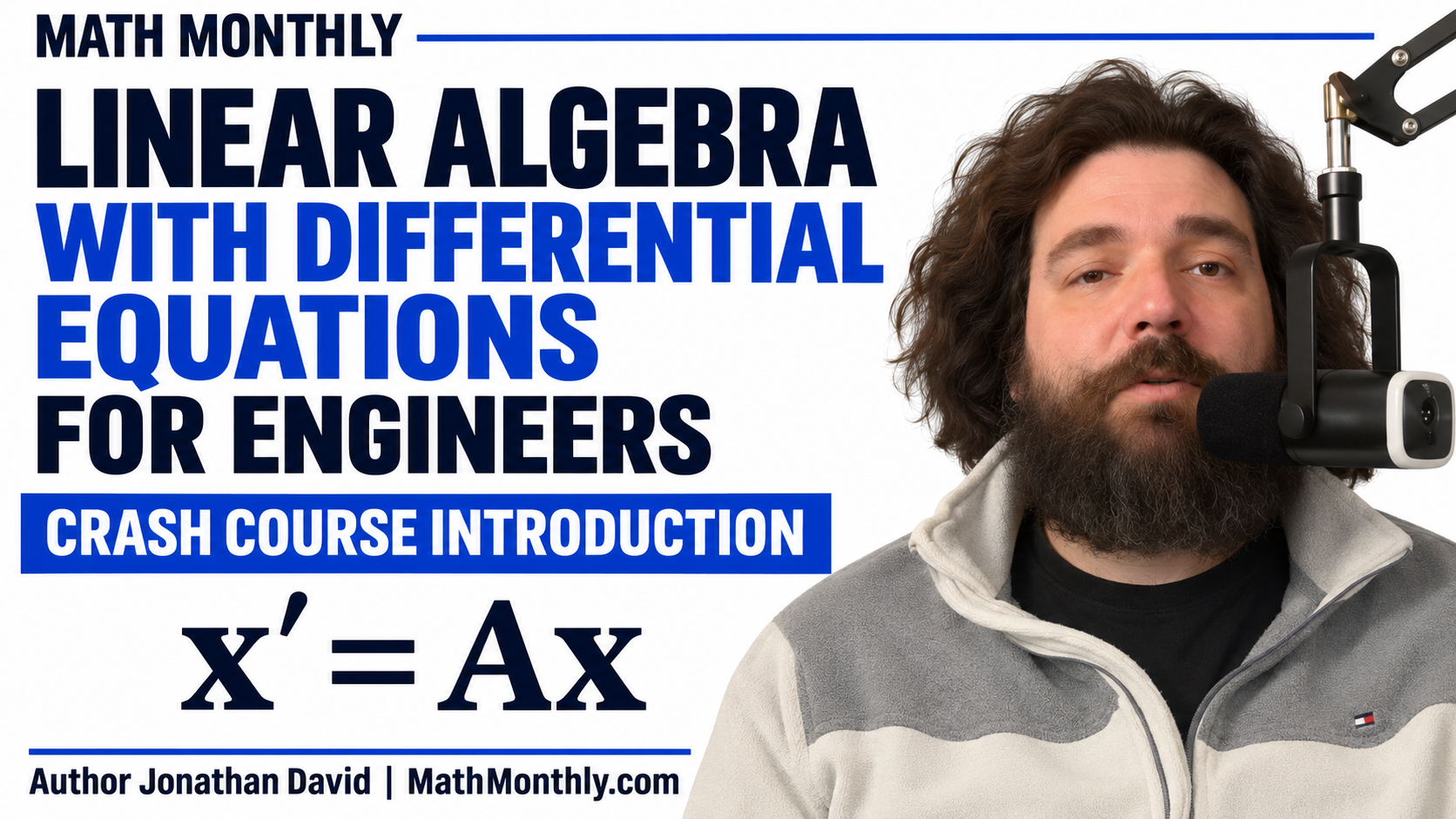
Author Jonathan David · The Ultimate Crash Course for PLEM Majors · Watch on YouTube What Changes When You Combine Linear Algebra and Differential Equations? In this Math Monthly podcast, I introduce the crash course and explain why it has its own place in the lesson library. A combined engineering […]
i no i’m write
115 posts

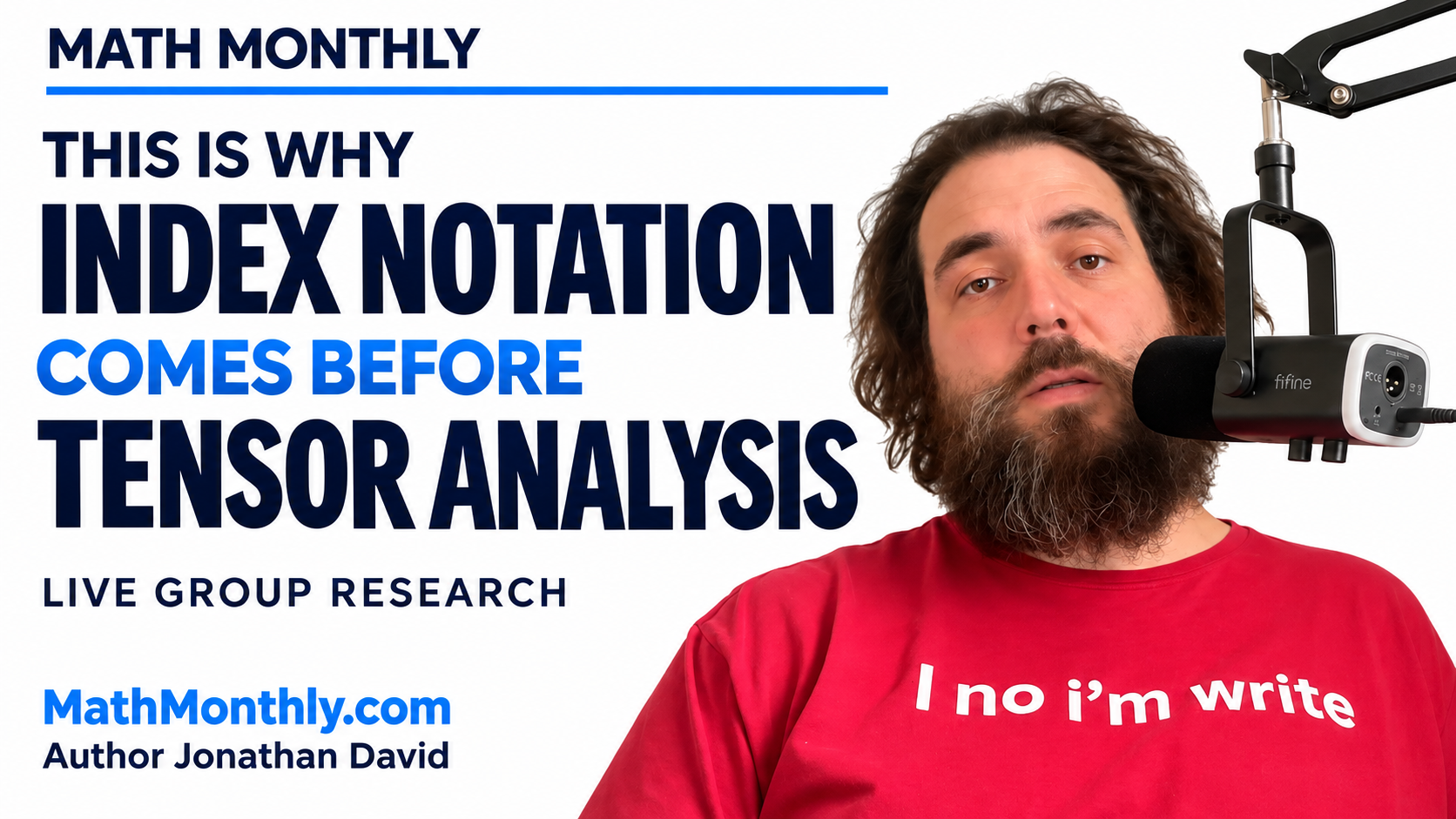
What’s different about an engineering course that combines linear algebra and differential equations? In this Math Monthly podcast, Author Jonathan David introduces the crash course and explains why the assigned textbook’s notation and methods matter when you write a solution.
The episode revisits a matrix exponential problem using Jordan form. A ChatGPT response meant to mimic Maple used the opposite change-of-basis convention from the textbook. The example shows why checking how the book defines P can help you catch a sign error before it carries through the calculation.
Jonathan also reflects on his experience tutoring a combined course and discusses how working through technical textbooks independently prepares students for index notation and tensor analysis.
Get full access and perks when you become a member @MathMonthly via https://www.youtube.com/@TheAuthorJonathanDavid/join

Author Jonathan David · Tips & Tricks for College PLEM Majors · Watch on YouTube How to Take Thanksgiving Break When Finals Are Coming The temptation starts the Friday before Thanksgiving. Leave early, stretch the holiday into ten days, and figure out finals when you get back. I did that […]

Finals are close, but Thanksgiving break is also a chance to see friends, spend time with family, and get some rest. In this episode of Tips & Tricks for College PLEM Majors, I talk about what’s worth reviewing over break, what can wait, and how to head back to class without feeling like you spent the whole holiday studying.
Get full access and perks when you become a member @MathMonthly via https://www.youtube.com/@TheAuthorJonathanDavid/join

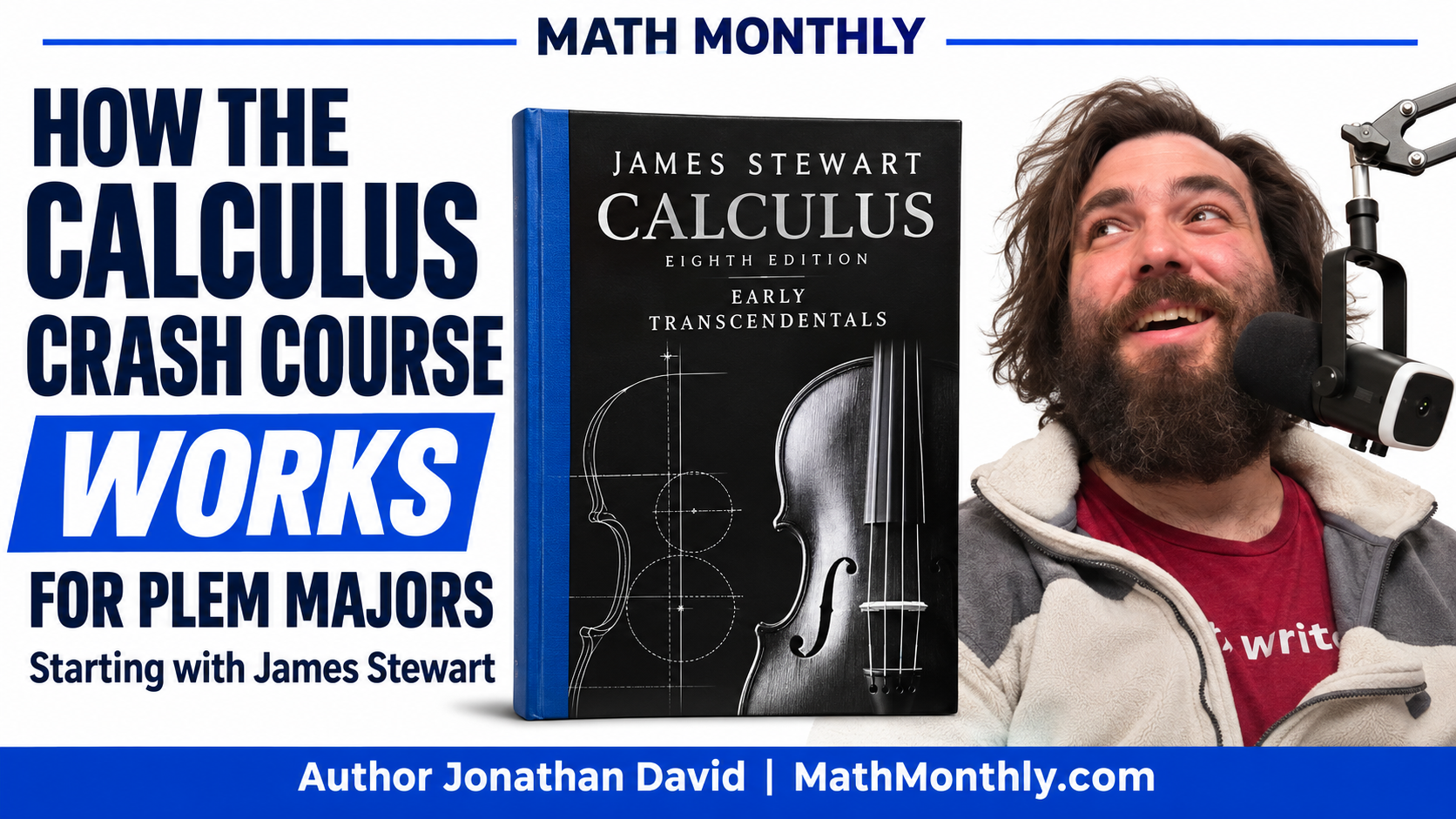
The Ultimate Crash Course for PLEM Majors — Volume Six How the Calculus Crash Course Works — Starting with the James Stewart Textbook Author Jonathan David introduces the calculus lesson library and its textbook-centered approach. Each planned lesson uses one exercise to demonstrate how to locate the relevant material, develop […]

Learn how to navigate your calculus textbook, write complete solutions, and verify that your answers satisfy the original question.
In this introductory podcast, Professor Jonathan D. Tullis explains the purpose of The Ultimate Crash Course for PLEM Majors – Calculus, Volume 6.
The lesson library follows James Stewart’s Calculus, with one selected question from each section used to demonstrate a repeatable textbook-based approach.
The focus includes:
• Identifying the definitions, theorems, and examples relevant to a question.
• Looking back through the textbook to find the tools you need.
• Writing clear, typed mathematical explanations with appropriate citations.
• Checking your answer against the original problem.
• Presenting a concise, organized solution suitable for an exam.
The goal is to develop independent textbook-reading and solution-writing skills. Each example demonstrates a method you can apply to additional questions yourself.
This video introduces the library’s approach and scope. Lessons are being developed, so some sections may not yet be available. Follow your own syllabus and instructor’s rules when choosing study resources.
Get full access and perks when you become a member @MathMonthly via https://www.youtube.com/@TheAuthorJonathanDavid/join

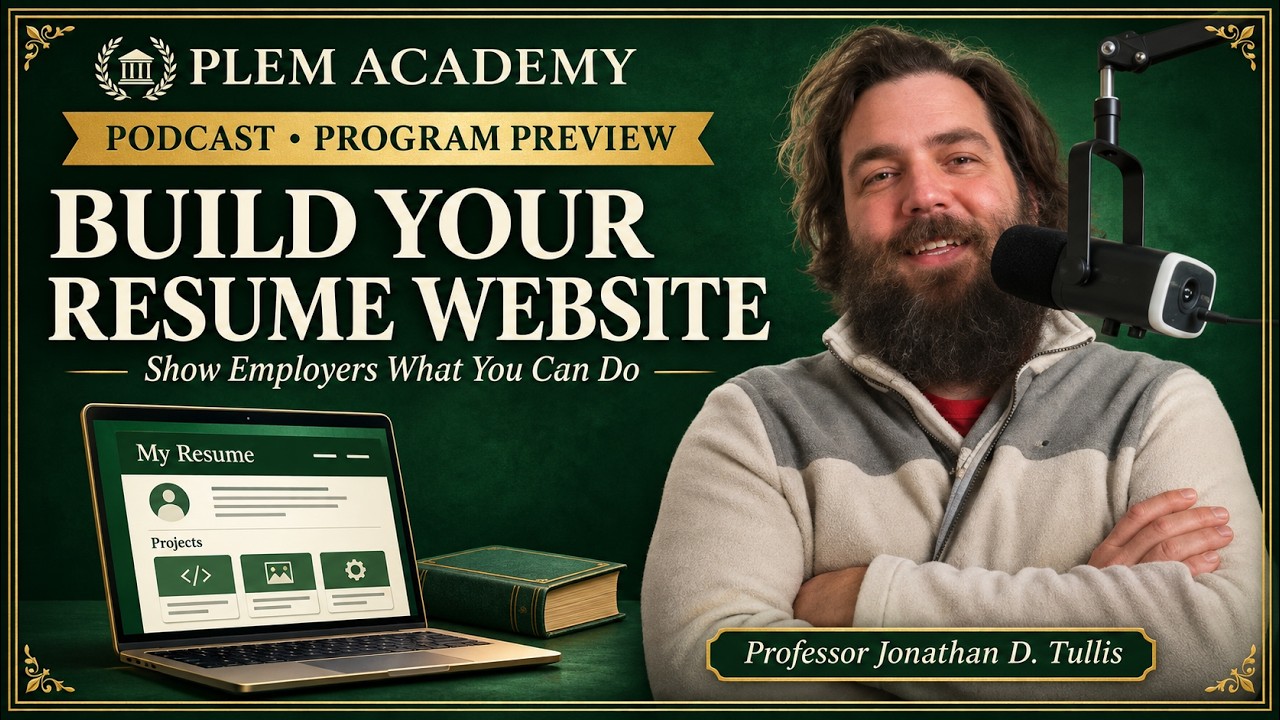
Build a professional website that connects your resume to original projects, recorded demonstrations, and a career-focused textbook you write.
In this podcast, Professor Jonathan D. Tullis introduces the website-building side of PLEM Academy and explains how it works alongside the textbook-writing program.
Start with your digital resume on the front page. As you develop skills throughout college, add relevant experience and connect those entries to examples of your work.
Topics include:
• Building a WordPress website tailored to your professional goals.
• Developing your website and textbook together over time.
• Identifying software and tools requested in jobs that interest you.
• Recording project work and explaining your methods.
• Organizing portfolio content for prospective employers.
• Using AI to assist with HTML and presentation while developing your own understanding.
• Choosing whether to share your work publicly or keep selected materials private.
• Exploring optional ways to promote your finished book.
The focus is consistent progress and honest documentation—no AI cheating. Create work you understand, practice explaining it, and give employers concrete examples of the skills on your resume.
This is a program introduction explaining the purpose of the website and portfolio, rather than a technical setup tutorial.
Get full access and perks when you become a member @MathMonthly via https://www.youtube.com/@TheAuthorJonathanDavid/join

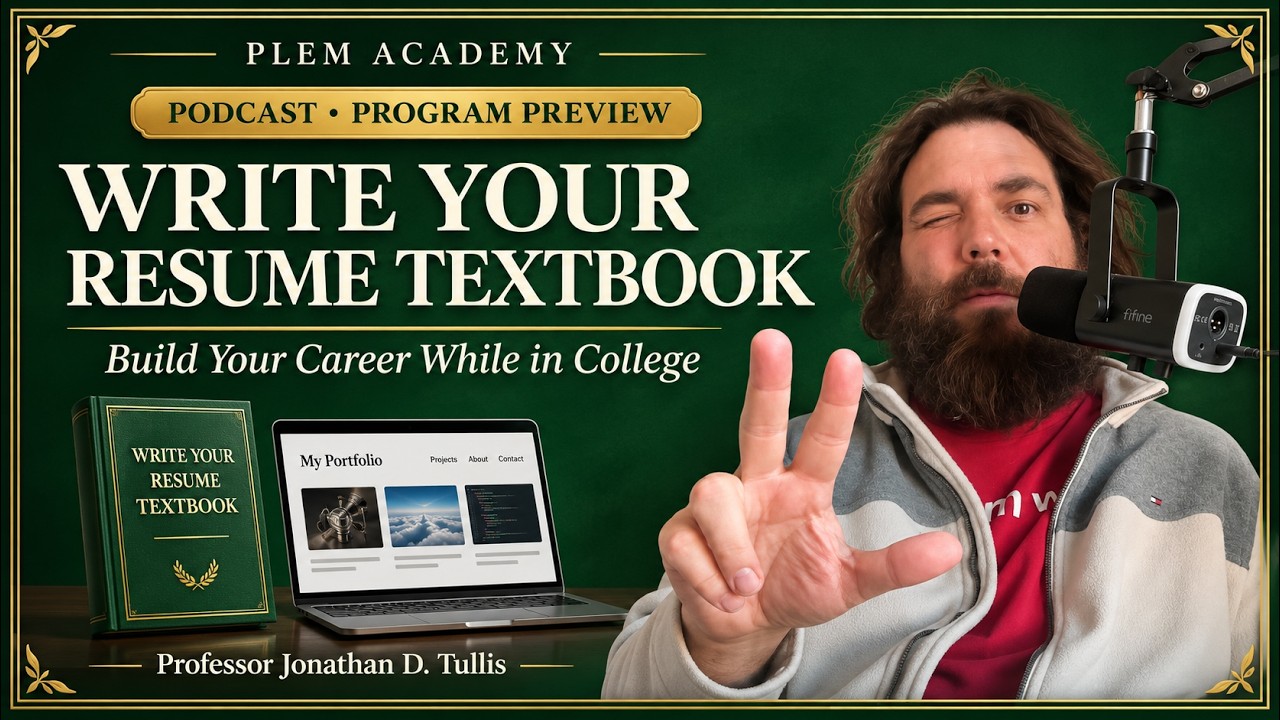
What if you arrived at a job interview with a textbook you wrote about preparing for that career—and a website documenting your work?
In this PLEM Academy program preview, Professor Jonathan D. Tullis explains how students can develop a career-focused textbook, digital resume, and recorded project portfolio throughout college.
His example book, How to Get a Job at NASA Before You Graduate, provides the framework. You follow the process while tailoring your own book to the jobs, skills, and career path that interest you.
The program’s approach includes:
• Researching job titles, qualifications, software, and experience requirements.
• Turning those requirements into an organized textbook outline.
• Developing relevant skills through original projects and permitted coursework.
• Recording your writing and project work with spoken explanations.
• Building a website that connects your resume to supporting demonstrations.
• Practicing professional writing, editing, and oral communication.
• Preparing your finished book for publication, with the option to share your work publicly or keep your portfolio private.
Professor Tullis also discusses reading your work aloud, reviewing your recordings, and making steady progress over time. The aim is to develop work you understand and can explain, while documenting your own learning without using AI to cheat.
This is an introduction to the program’s purpose and planned workflow, using NASA as an illustrative career goal.
Get full access and perks when you become a member @MathMonthly via https://www.youtube.com/@TheAuthorJonathanDavid/join

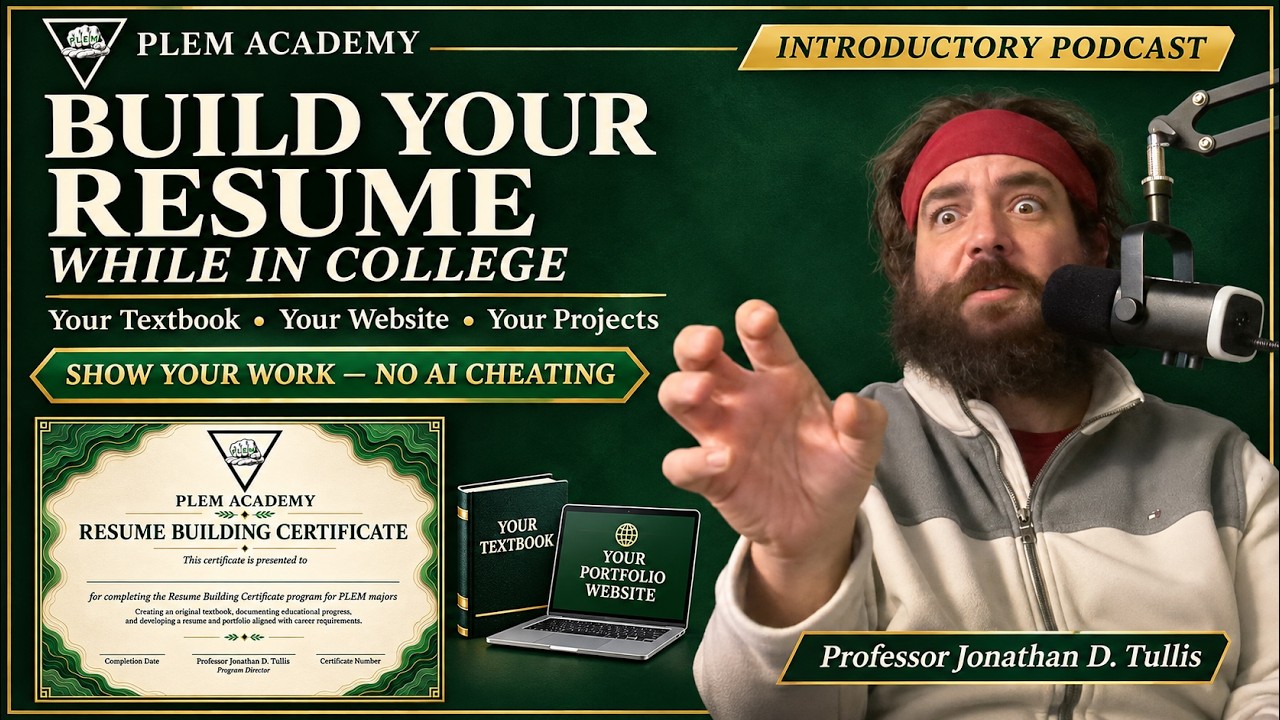
Turn your college education into a textbook, a professional website, and a portfolio that shows employers what you can do.
In this introductory podcast, Professor Jonathan D. Tullis explains the PLEM Academy Resume Building Certificate program—a guided, self-paced approach to developing career skills while working toward your degree.
The goal is to write your own career-focused textbook while documenting the skills, projects, and experience behind your resume. Begin with job postings that interest you, identify the tools employers request, and build those skills into your educational work.
Explore how to:
• Write and organize your own 200-plus-page textbook.
• Build a WordPress website to host your digital resume and portfolio.
• Record original projects with screen recordings, explanations, and demonstrations.
• Practice career-relevant software alongside your college studies.
• Strengthen your written and oral communication.
• Document your own work and demonstrate responsible AI use—without using AI to cheat.
• Prepare your finished book for publication.
Follow along as Professor Tullis develops his own career-focused book and demonstrates the process step by step. The objective is to graduate with more than a list of courses: bring a book you wrote and a portfolio of work you can explain.
Get full access and perks when you become a member @MathMonthly via https://www.youtube.com/@TheAuthorJonathanDavid/join



Math Monthly — Engineering Research Why Index Notation Comes First — Preparing for Tensor Analysis Author Jonathan David outlines the next stage of the Math Monthly engineering journal: developing index notation before moving into tensor analysis. The discussion connects mathematical definitions, technical writing, independent study, and collaborative work with unfamiliar […]