

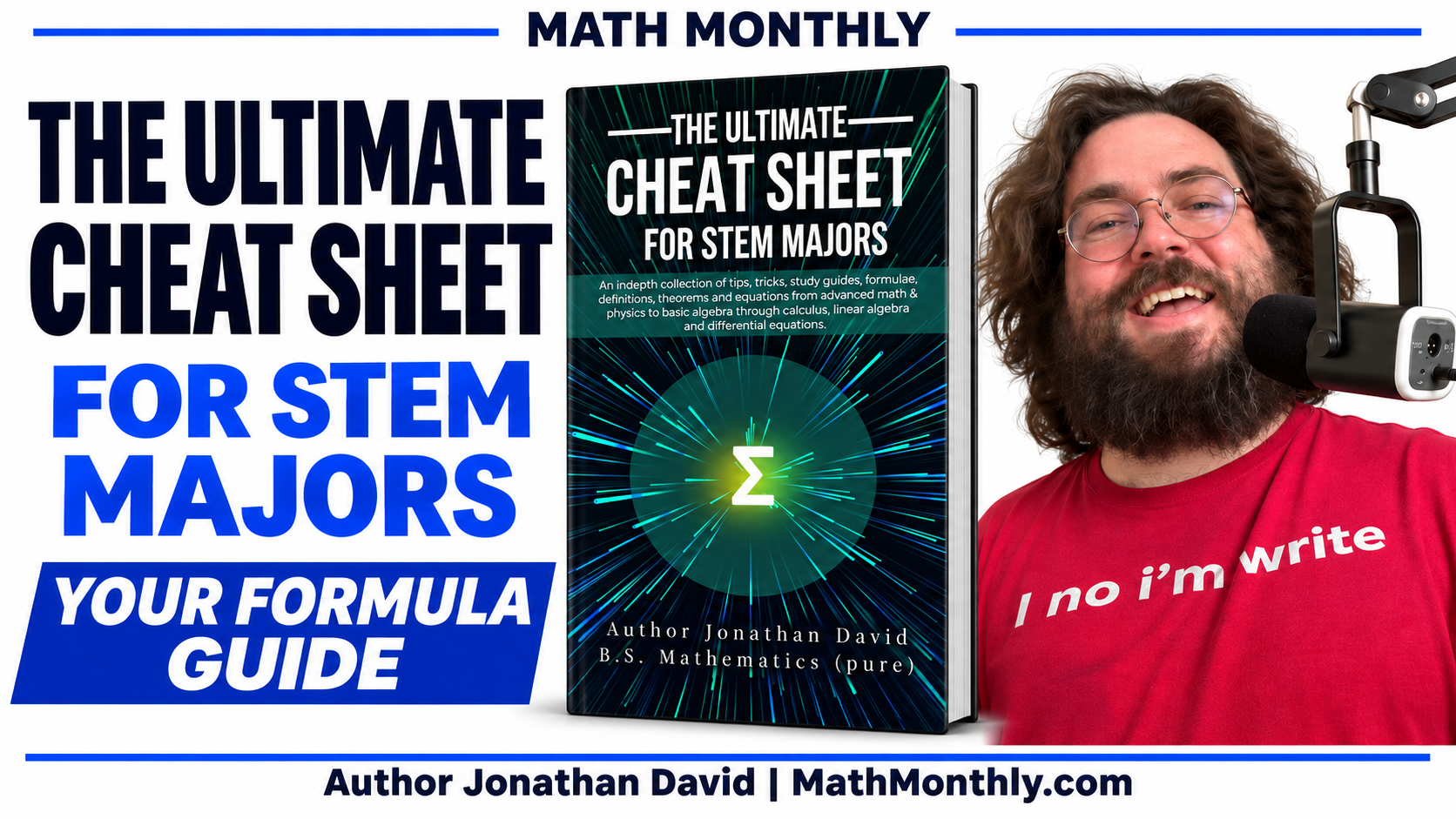
Math Monthly — Books & Study Resources The Ultimate Cheat Sheet for STEM Majors — A Formula Guide for STEM Majors Author Jonathan David introduces The Ultimate Cheat Sheet for STEM Majors, also described as his formula guide. Learn how the collection combines study guidance, mathematical formulas, notation, explanations, and […]
Daily Archives: November 5, 2026
23 posts

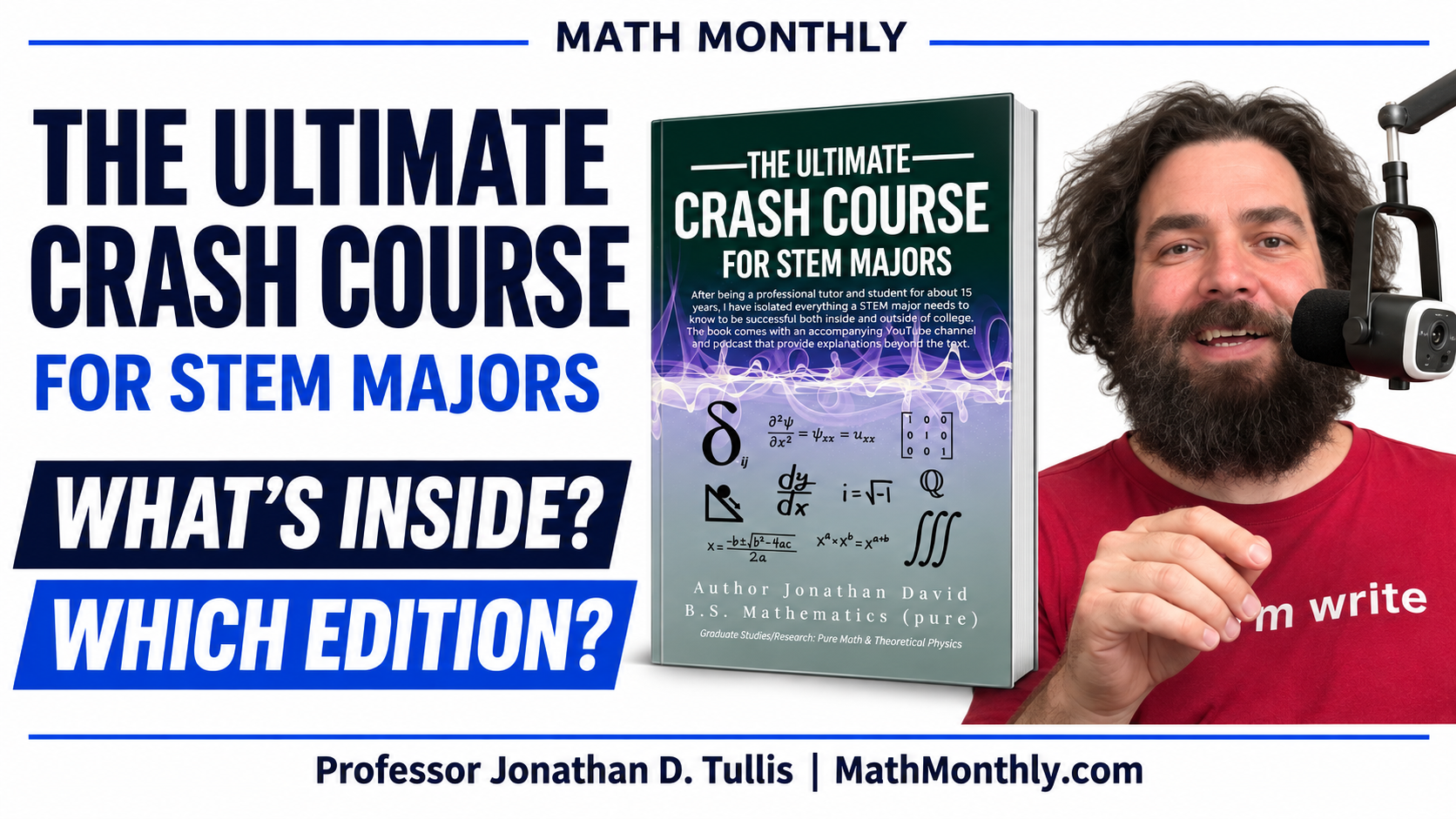
Math Monthly — Books & Study Resources The Ultimate Crash Course for STEM Majors — What’s Inside and Which Edition to Choose Professor Jonathan D. Tullis explains why he wrote The Ultimate Crash Course for STEM Majors, how the material is organized, and the differences between the PDF bundle, Quartic […]

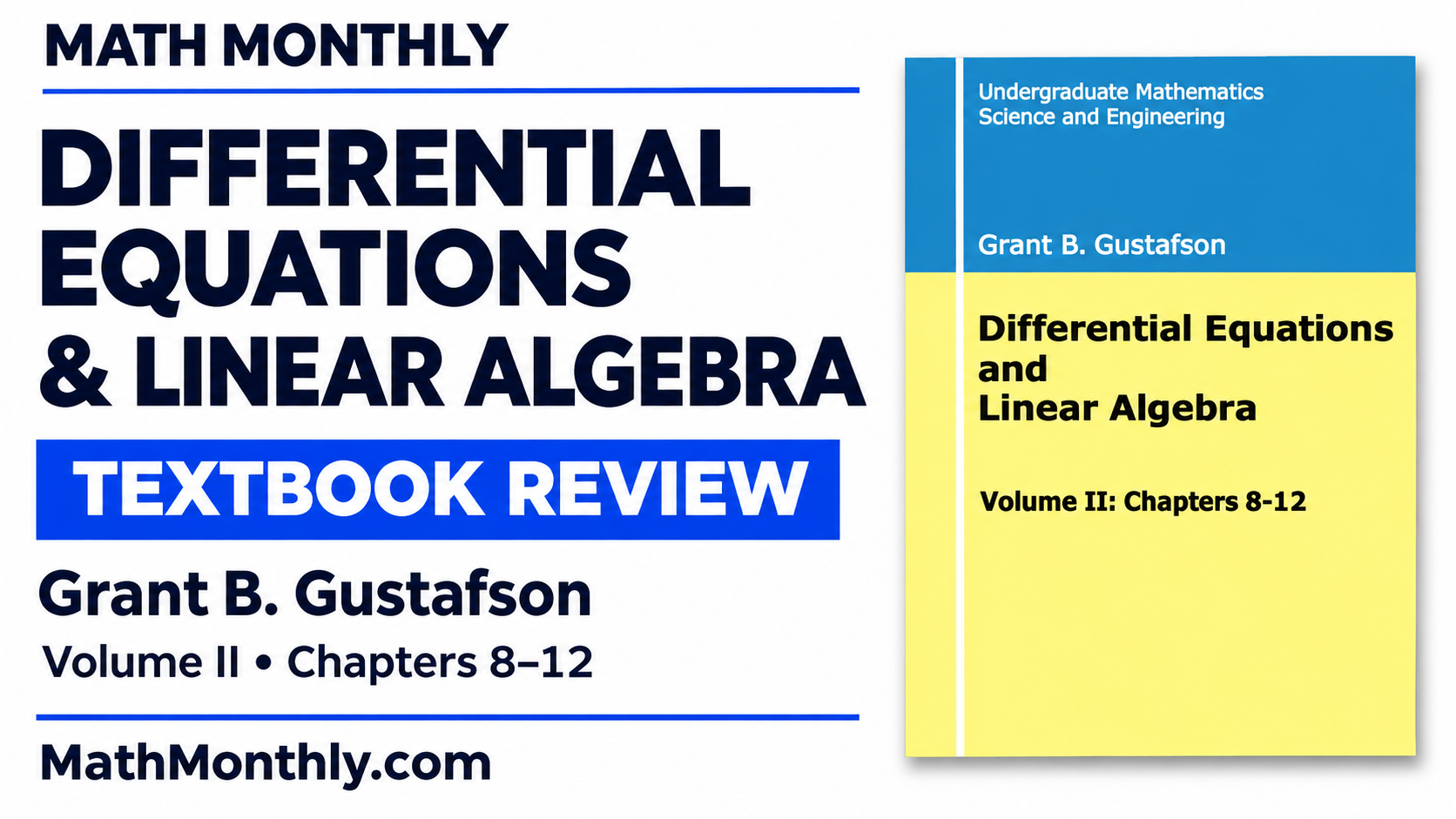
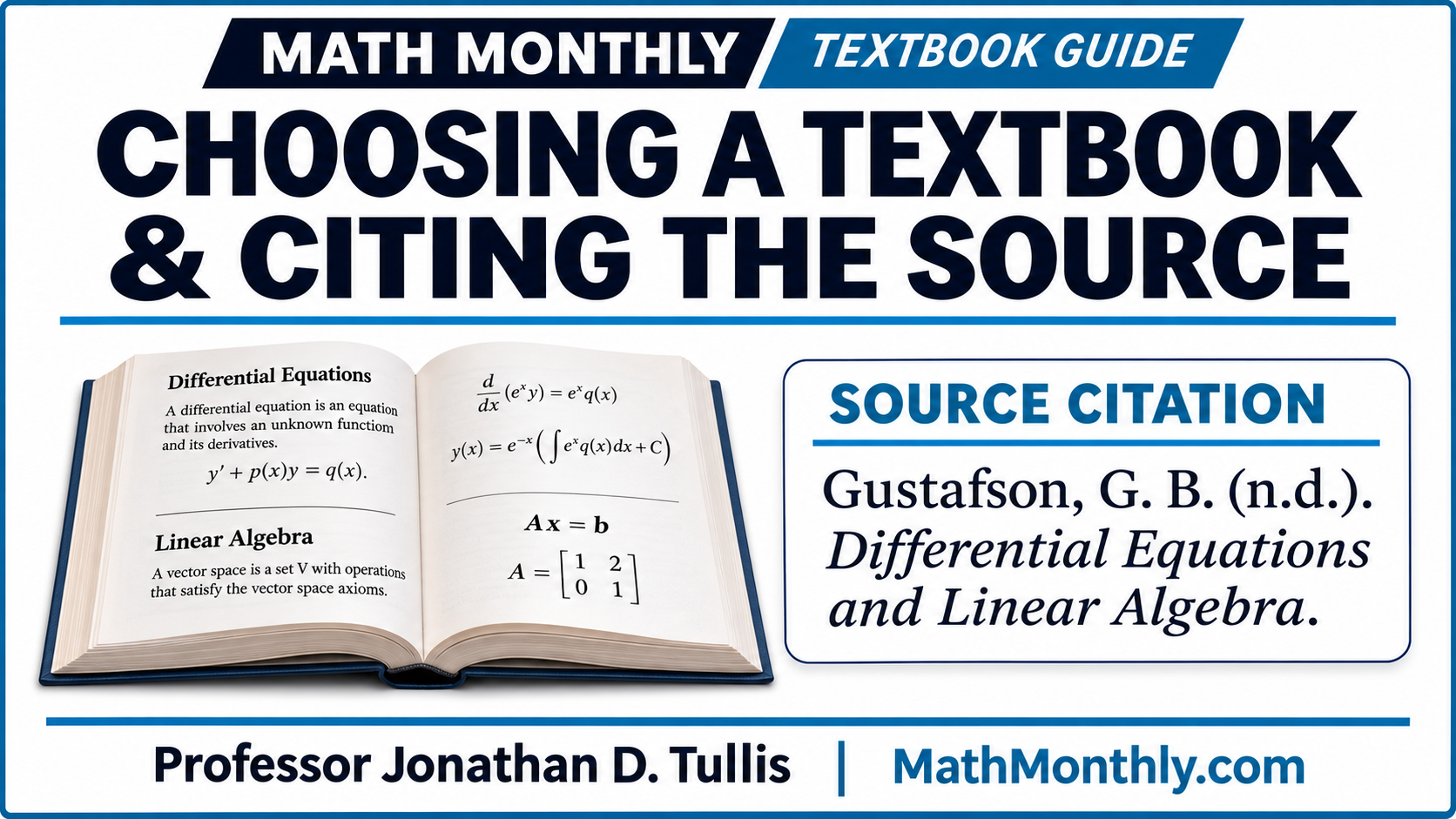
Math Monthly — Engineering Textbook Review Differential Equations and Linear Algebra — A Course for Science and Engineering Join Professor Jonathan D. Tullis for a review of Grant B. Gustafson’s Differential Equations and Linear Algebra: A Course for Science and Engineering. This Math Monthly discussion explores textbook navigation, analytical and […]

Math Monthly — Volume One Engineering — November 2026 Math Monthly Research Program Professor Jonathan D. Tullis introduces the engineering focus for Math Monthly, Volume One. Learn how the group approaches unfamiliar textbooks, develops written solutions, explores research topics, and brings its work together in an interactive monthly journal. Watch […]

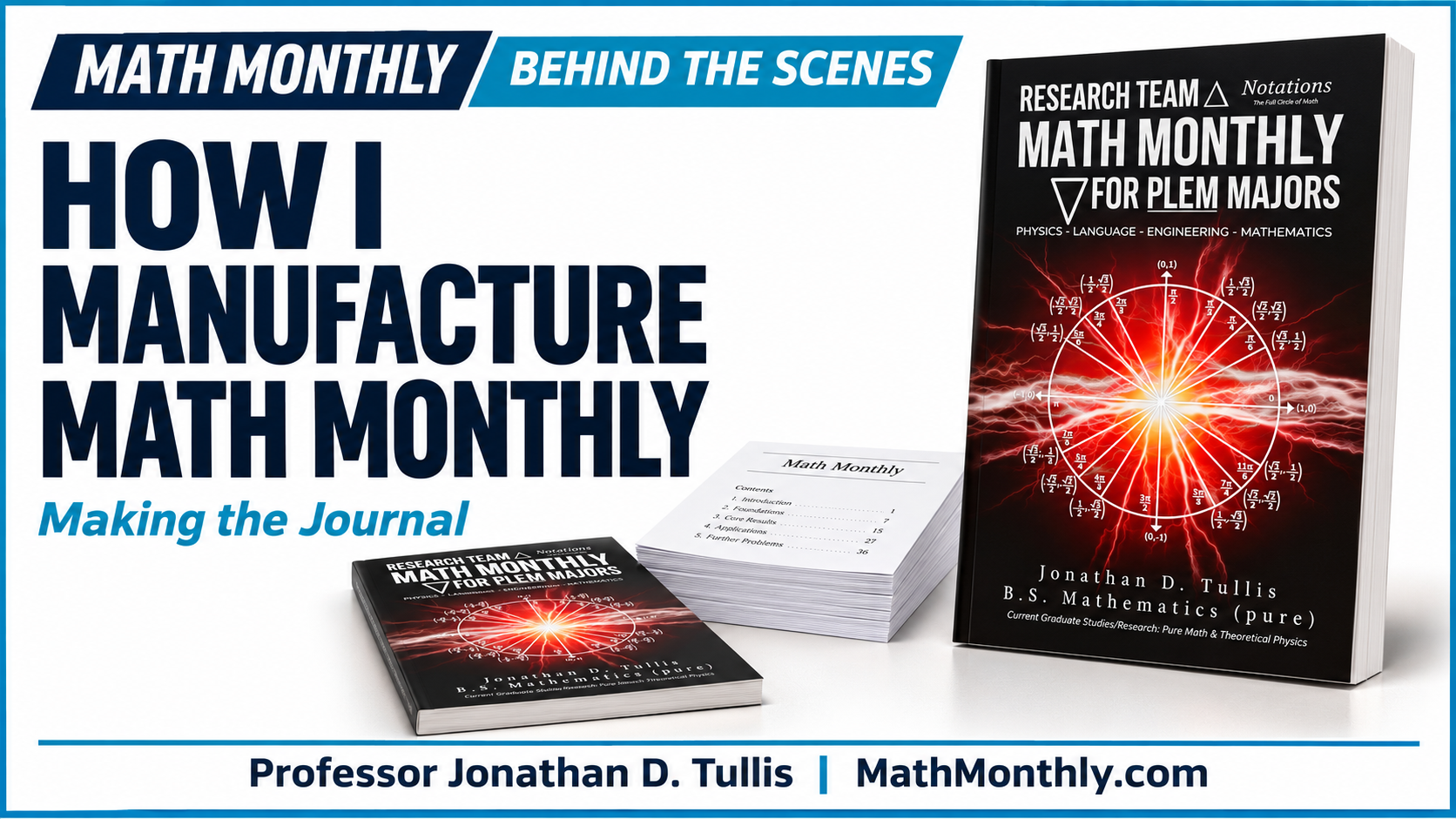
Math Monthly — Behind the Scenes This Is How I Manufacture the Math Monthly Journal Watch Professor Jonathan D. Tullis assemble the first physical prototype of the Math Monthly journal. From scoring the cover and preparing the adhesive to thermal binding, trimming, and making a laminated bookmark, this video follows […]

Math Monthly — Research Preparation Choosing a Textbook and Citing the Source Follow Professor Jonathan D. Tullis as he selects a textbook for exploration and introduces the next step: citing the source. This brief Math Monthly clip captures the beginning of the research process. Watch this video on YouTube ↗ […]
Explore math, physics & engineering. Books, PDFs & lessons from Math Monthly. Visit MathMonthly.com Algebra Rules – Fractions, Exponents, Radicals and Complex Numbers Keep Learning with Math Monthly If you’re a PLEM enthusiast interested in math, physics, or engineering, join Math Monthly at MathMonthly.com. Explore my books and PDF bundle, […]

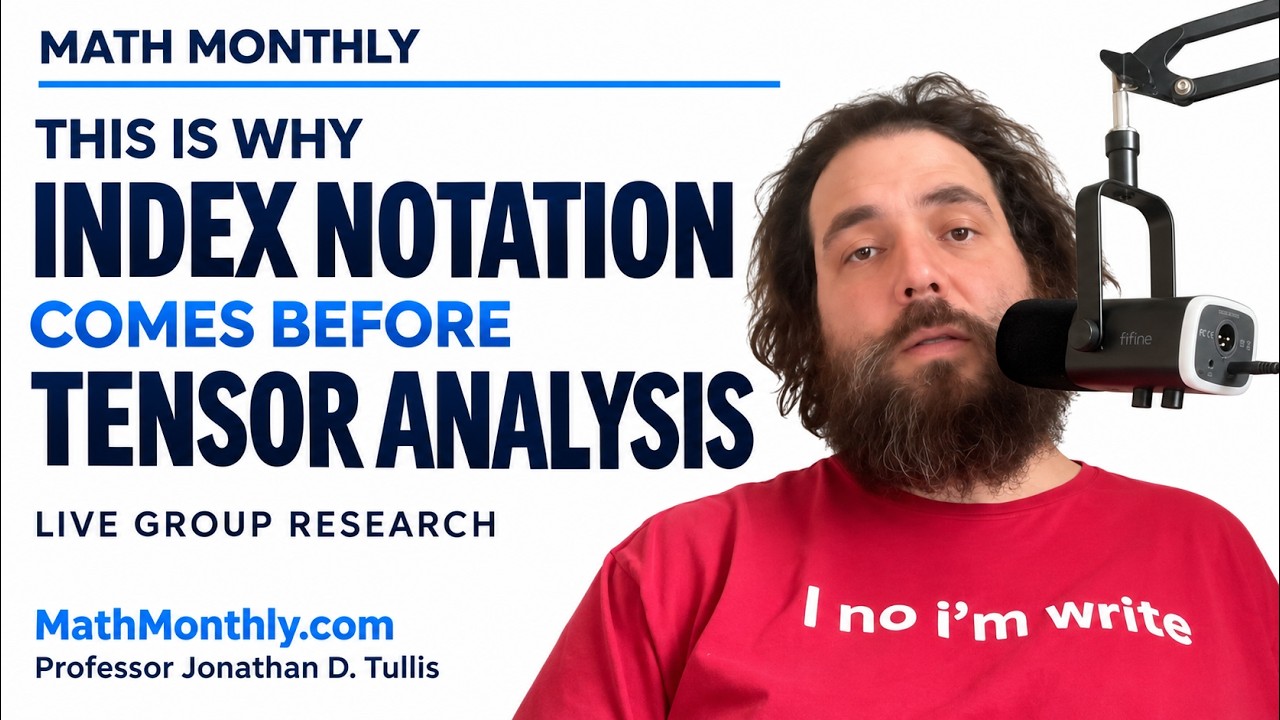
Discover how our live research group will explore index notation, build toward tensor analysis, and practice writing professional mathematical documents using Mary Boas’s textbook.
Get full access and perks when you become a member @MathMonthly via https://www.youtube.com/@TheAuthorJonathanDavid/join

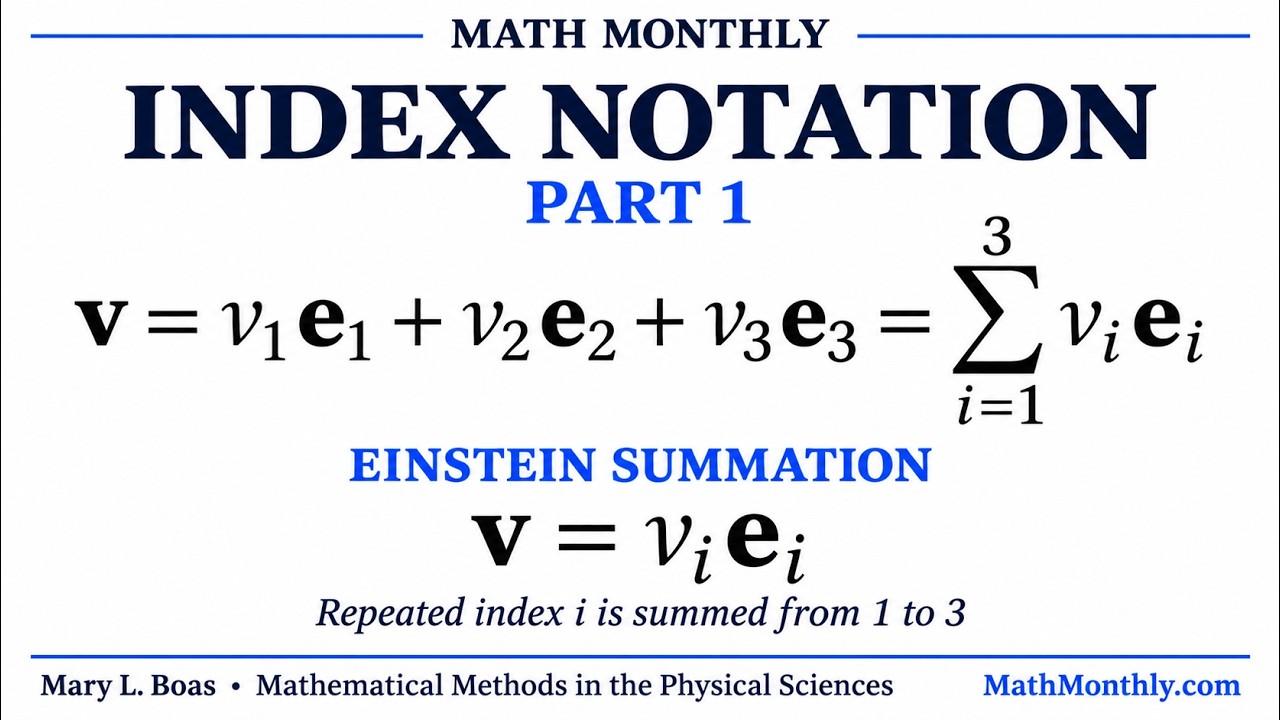
Learn how sequences, vector components, and basis vectors introduce index notation and Einstein summation convention in preparation for tensor analysis.
Textbook reference: Mary L. Boas, Mathematical Methods in the Physical Sciences, 3rd edition, Wiley.
Get full access and perks when you become a member @MathMonthly via https://www.youtube.com/@TheAuthorJonathanDavid/join

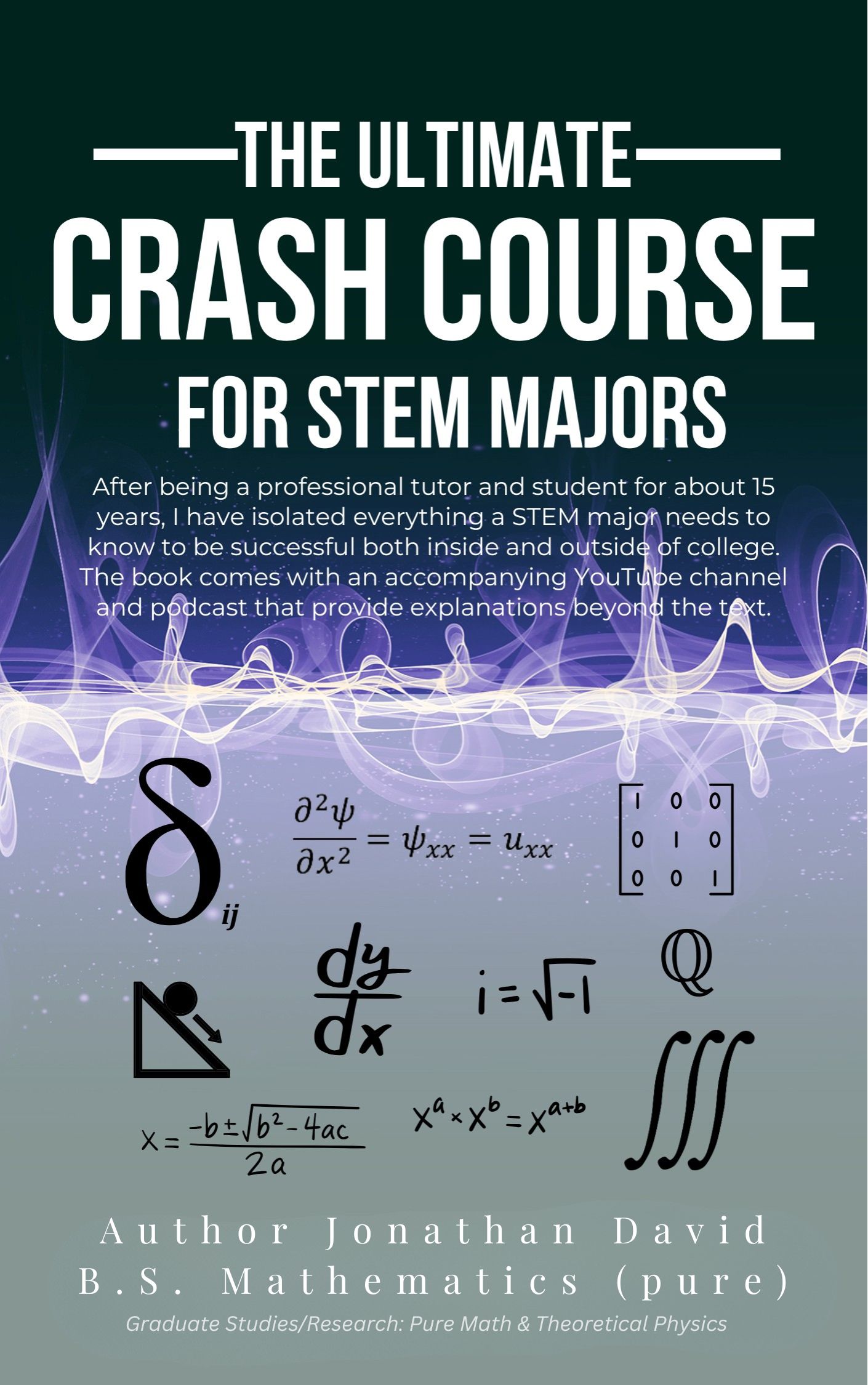
Math Monthly — Inside the Book
Inside The Ultimate Crash Course for STEM Majors — Algebra, Calculus & Beyond
Take a look inside The Ultimate Crash Course for STEM Majors with Author Jonathan David. This walkthrough previews the algebra review, detailed calculus solutions, and introductory material on vectors, physics, linear algebra, differential equations, and index notation.
Watch the inside-the-book preview on YouTube ↗
See the Explanations, Calculations & Written Solutions
Jonathan demonstrates the book’s student-oriented presentation and compares it with the more formal layout of his mathematical journals.
- Review algebraic manipulation, exponential expressions, and notation.
- Preview calculus examples through sequences and series.
- Explore introductory vector calculus, physics, and index notation.
- See the accompanying library of recordings showing the books being written.
Continue Exploring with Math Monthly
Explore mathematics, physics, and their connections to engineering with Author Jonathan David. Discover the available Math Monthly memberships and follow the development of new lessons and journal material.